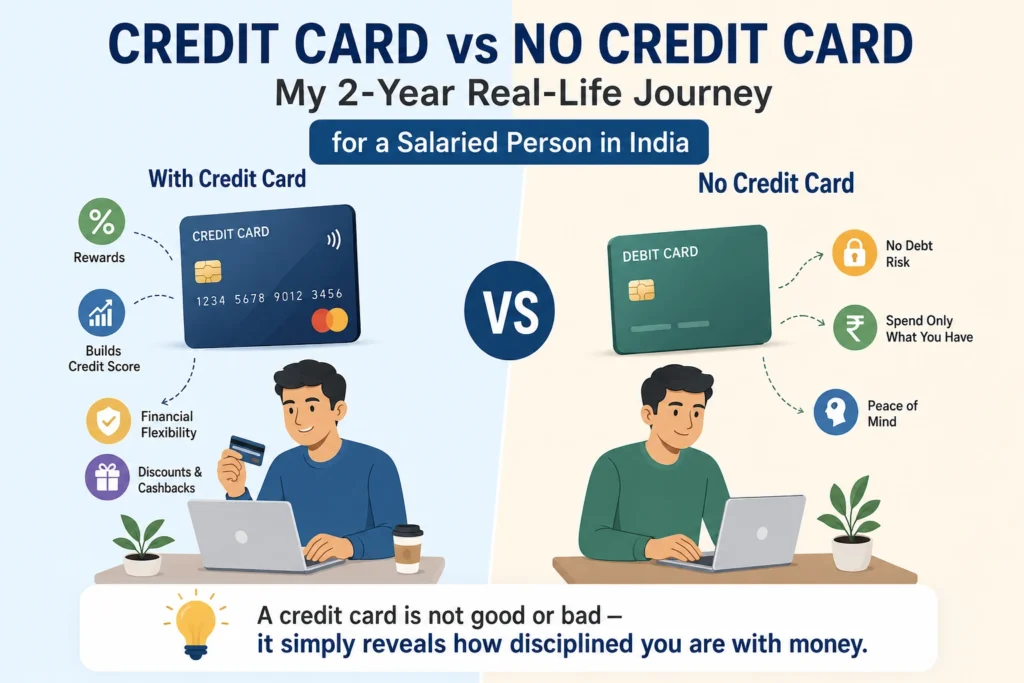
Credit Card vs No Credit Card for a Salaried Person in India: My 2-Year Real-Life Journey
Introduction: The Question I Kept Avoiding
This is a reminder post for my 2yr- old me who got his first job, a new fresh beginning and feel financially independent for the first time. At the same time, I started receiving sales call from banks for getting my first credit card.
As I said before this is not a comparison blog, it is a reflection of old me.
Initially I rejected all the sales calls, but I then I asked my colleague about this. He explained me a very basic idea of credit card. With a mandatory dialogue of saying credit card is a two-sided knife. Based on the feedback from him, I got my first credit card which has lifetime free benefits, cashback offers and reward points, yeah, sounds tempting right? I too tempted for it.
This blog begins with a very simple question that I believe most salaried professionals in India have faced at least once — Should I get a credit card, or am I better off without one?
The Decision: Getting My First Credit Card
Before getting my first credit card, I was in a peak hesitation while filling out the application, it felt like stepping into something risky. Actually, it is quite risky.
My first card had a very small limit, ( it is an HDFC beginner credit card with a 40K limit) which I actually enjoyed. It forced me to stay within a controlled spending boundary. I made a rule for myself:
I will only spend what I can repay immediately. At first, I used the card for small expenses like my pg- rent, outside food, movie & travel booking. Nothing on luxury spending. But even with that spending I have enjoyed the reward points and cashback returns.
Cashbacks started coming in. Discounts appeared automatically at checkout. Slowly, I understood how to use the card smartly instead of fearing it.
The Turning Point: Understanding Responsible Usage
The real difference didn’t come from owning a credit card. There was one moment that changed everything.
One month, I have shifted from Pg hostel to room, that the biggest mistake I have done. I have extended my expense, even though I have paid on time, that has made me on fear about credit card. Then the next month it has shifted to next level, by paying delay. Even though it is an one day delay, the interest and penalty have reflected in my statement.
That was a wake-up call. I realized that a credit card is not “extra money.” It’s a responsibility. If used it much carelessly, it can turn into debt very quickly. But if handled wisely, it becomes a powerful financial tool.
From that point on, I made strict rules: I never missed a due date. I always paid the full amount, not the minimum. I kept my usage well within my limits and that’s when I started seeing the real power of the card.
The Benefits I Experienced Over 2 Years
Over the next year, my experience with credit cards improved significantly. I started planning purchases around offers, earning meaningful cashback, and even traveling at discounted rates, but beyond these visible benefits, something more important happened — I built a credit history.
Now I have become an expert in credit cards, currently I have 5 credit cards, which have improved my financial planning well. I have figured out shopping on my credit card with discounts, earning a true meaning full cashbacks and even I have travelled on discounted rates, beyond all benefits I have received, I have got a credit history.
Those credit card repayment history had made my credit worthy. Yes, it has improved my credit score in a tremendous way. This gave me confidence about my loans & investments, though this credit score, I have taken loan for my sister’s marriage and my home loan.
Also, having a credit card became useful during emergencies. There were moments when I faced urgent expenses, and my credit card gave me immediate support without disturbing my savings.
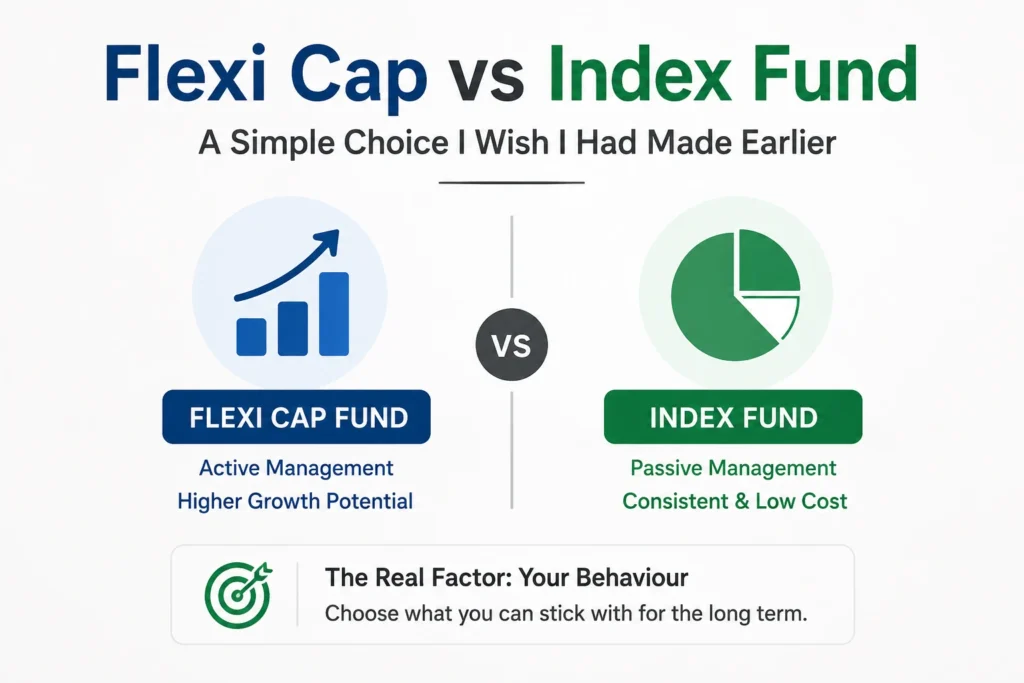
Flexi Cap vs Index Fund — A Simple Choice I Wish I Had Made Earlier –> Click here to read
The Hidden Downsides You Should Not Ignore
Yes guys, you can’t disagree with me on this, there are more hidden downsides on credit card, it will always have an temptation on over spending for someone who is not financially disciplined. Even some small purchase adds up quickly and before you realize it, your bill will pile up and become over whelming.
Another concern is psychological spending. The comfort of “pay later” can make you justify unnecessary expenses.
I’ve had a huge group of friends fall into this trap. Late fees, interest charges, and growing debt cycles are not rare and also once you get stuck in this trap, it becomes stressful. So, while credit cards offer benefits, they demand responsibility.
Credit Card vs No Credit Card: My Honest Comparison
After living both sides for a year each, I can say this clearly — neither option is right or wrong on its own.
Living without credit card is not possible for current me. Even I have connected all my UPI spends in credit card so it is always behaviour and mindset.
A life without a credit card gives you complete control and peace of mind. It forces you to stay within your means and eliminates the risk of debt.
But on the other hand, credit card wisely opens up financial opportunities which you never imagined. It helps you build a credit score, earn rewards, and manage cash flow more efficiently.
The key difference lies in discipline. The most important thing is the credit card does not make you financially independent – it is always habits.
What I Would Recommend to a Salaried Person in India
If you are just starting your career, I would suggest spending a few months without a credit card. Learn how to manage your salary, track your expenses, and build basic financial discipline.
Once you are confident, get a credit card with a small limit. Treat it like an borrowed cash, no extra money. Because you are gone repay it. So avoid impulse buying and pay the full bill on time. Think it as a tool, not a lifestyle upgrade.
Conclusion: My Journey in One Simple Line
If I had to summarize my 2-year experience in one sentence, it would be this:
A credit card is not good or bad:- it simply reveals how disciplined you are with money. Today, I use my credit card without fear, but also without carelessness.
Now I have 5 credit card:-
- Axis Neo
- HDFC moneyback card
- IDFC millennia
- IDFC power card
- HDFC Rupay card
Disclaimer
This article is intended for educational purposes only and reflects personal experience. Kindly consider this as Not Financial advice.
About the Author
I am Livin Rangasamy, NISM-certified professional and mutual fund distributor, focused on simplifying personal finance for beginners.
For similar posts – Click here