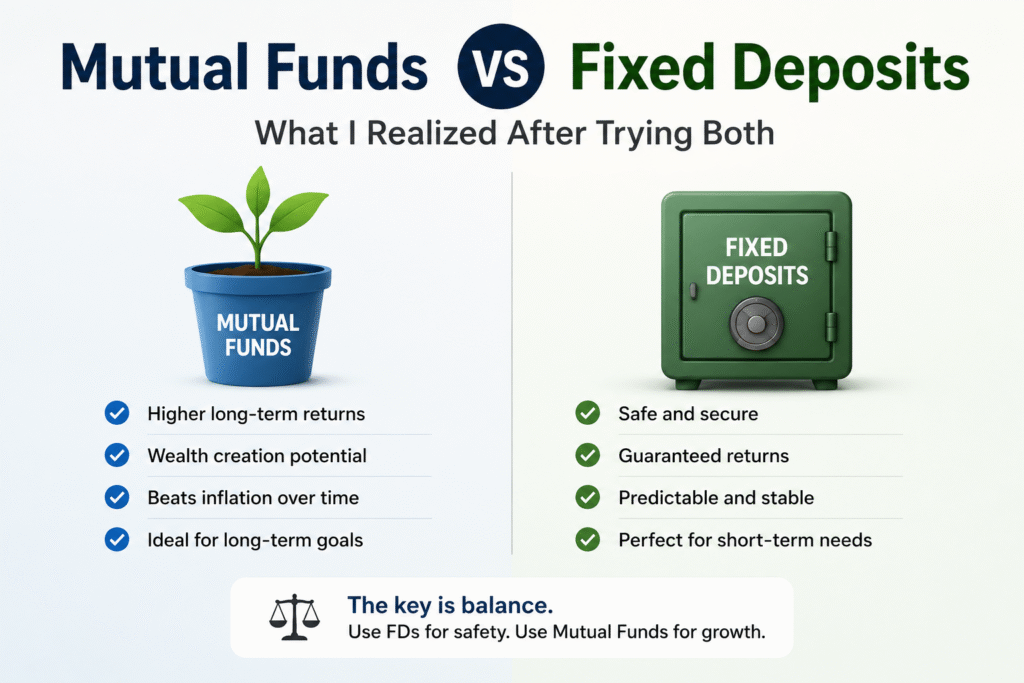
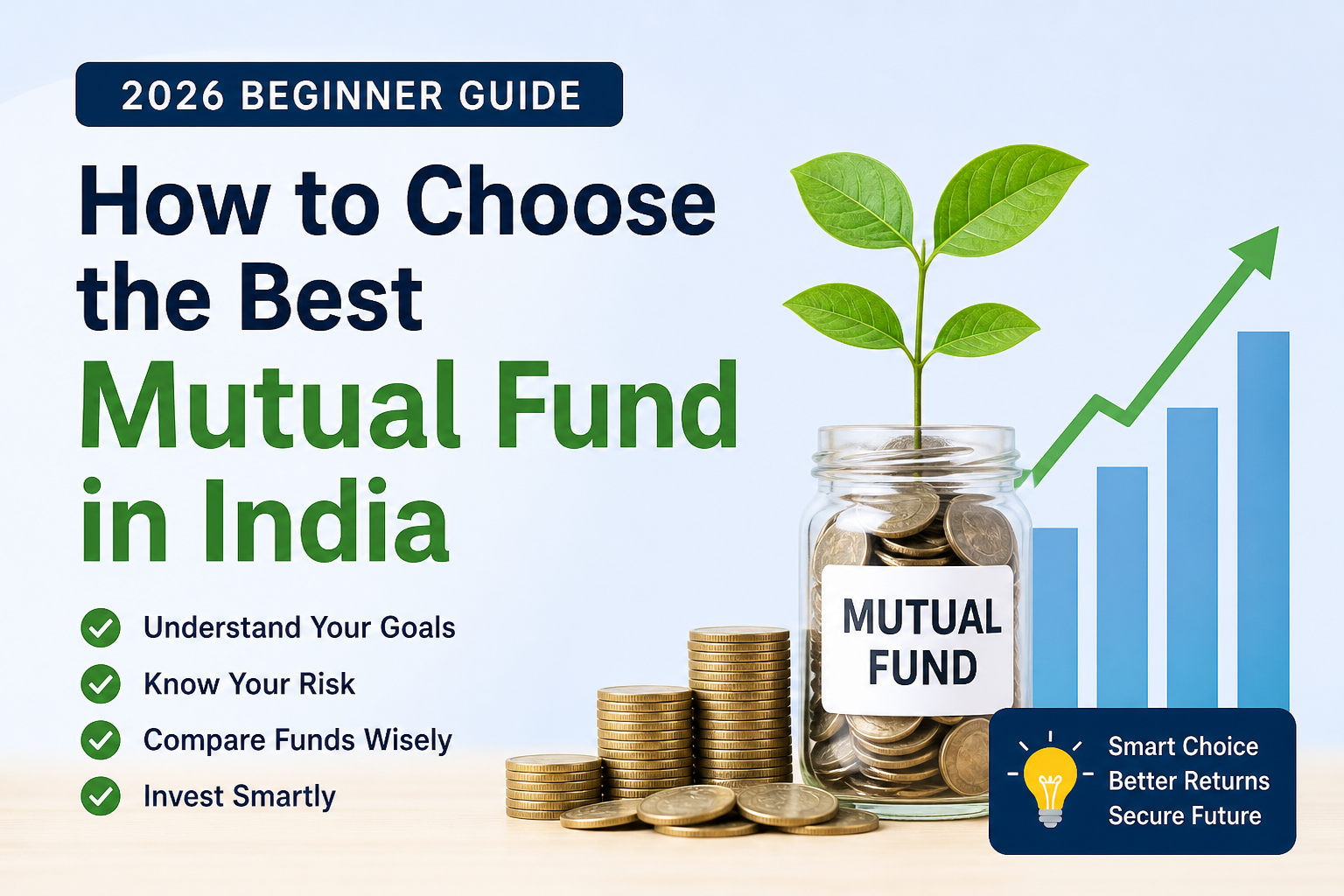
How to Choose the Best Mutual Fund in India (Beginner Guide 2026)
Starting with mutual funds sounds simple at first. But the moment you try to choose one on your application or Fund House, things quickly get confusing.
There are so many options and things to be decided before getting into mutual funds. Some funds show high returns, some are trending, and others are recommended everywhere.
Let’s make this one most important thing in the being…
“There is no Best or Amazing mutual fund that will fit for all people”
The right fund depends on your personal goals, how much risk you can handle, and how long you plan to invest.
Once you understand this, choosing a mutual fund becomes much easier.
Why Choosing the Right Mutual Fund Is Important
A common mistake which all the beginners will make is selecting a fund just because it performed well on recent days.
It feels like a smart decision, but markets don’t work that way.
A fund that gave high returns last year may not repeat the same performance. If you invest without understanding, you may end up taking more risk than you’re comfortable with.
This often leads to panic when the market falls.
On the other hand, when you choose a fund based on your own needs, you feel more confident and are more likely to stay invested.
And in mutual fund investing, staying invested is what really makes the difference.
Step 1: Know Your Investment Goal
Before choosing any mutual fund, take a moment to think about why you are investing.
Ask yourself:
- What am I investing for?
- When will I need this money?
For example:
- Planning a short trip → short-term goal
- Saving for a house → medium-term goal
- Building retirement savings → long-term goal
Your goal will guide your decision.
A simple way to choose:
- Long-term goals → Equity or index funds
- Short-term goals → Debt funds
- Balanced approach → Hybrid funds
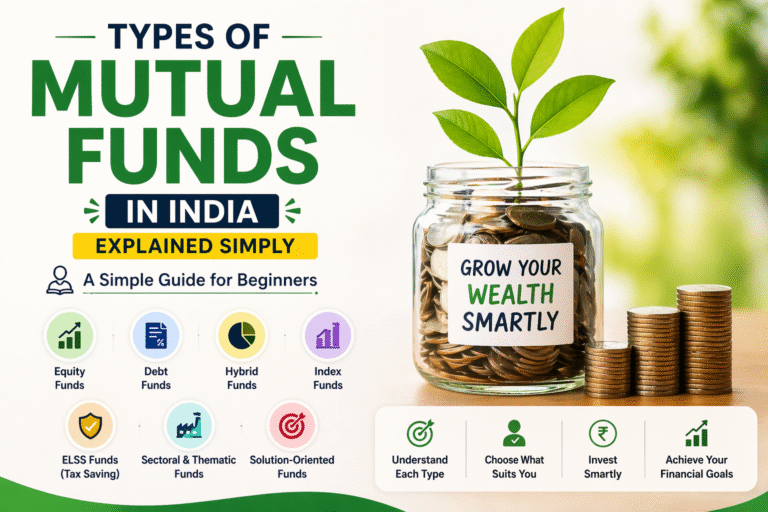
If you’re not sure about these types, you can refer to your guide on Types of Mutual Funds in India.
Step 2: Understand Your Risk Comfort
Every investment carries some level of risk. The important part is choosing the amount of risk you can handle.
Be honest with yourself.
- Will you stay calm if your investment drops?
- Or will you feel stressed and want to withdraw?
Basic idea:
- Low risk → Debt funds
- Moderate risk → Hybrid funds
- High risk → Equity funds
There’s no need to take high risk if you’re not comfortable with it.
Step 3: Look at Performance the Right Way
Past performance is useful, but it should not be your only decision factor.
Many beginners only look at short-term returns, like 1-year performance. That can be misleading.
Instead, look at:
- 3-year returns
- 5-year returns
- Overall consistency
A fund that performs steadily over time is usually more reliable than one that shows sudden high returns.
Step 4: Pay Attention to Expense Ratio
Expense ratio is the cost charged by the fund to manage your investment. Even though it looks small, it affects your returns over time. Lower cost means you keep more of your money.
That’s why many investors prefer:
- Index funds
- Direct plans
Always compare costs before investing.
Step 5: Check the Fund’s Track Record
Before investing, it’s a good idea to look at the basic background of the fund.
You don’t need deep research. Just check:
- How long the fund has been running
- How it has performed in different market conditions
- Whether it has been consistent
Also, the fund manager matters. A well-managed fund often performs better over time.
Step 6: Choose Between Direct and Regular Plans
When you invest, you’ll see two options: direct and regular.
Here’s the simple difference:
Direct Plan:
- No middleman involved
- Lower charges
- Better returns over time
Regular Plan:
- Includes advisor commission
- Slightly higher cost
If you are comfortable managing your investments, direct plans are usually the better option.
Step 7: Keep It Simple in the Beginning
You don’t need a complicated strategy to start investing.
In fact, simple works best.
- Start with one or two funds
- Invest regularly through SIP
- Stay consistent
Trying to do all at same time will give confusion.
Common Mistakes to Avoid
Many beginners make similar mistakes. Avoiding them can improve your results.
- Choosing funds based only on recent returns
- Investing without a clear goal
- Ignoring your risk level
- Switching funds too often
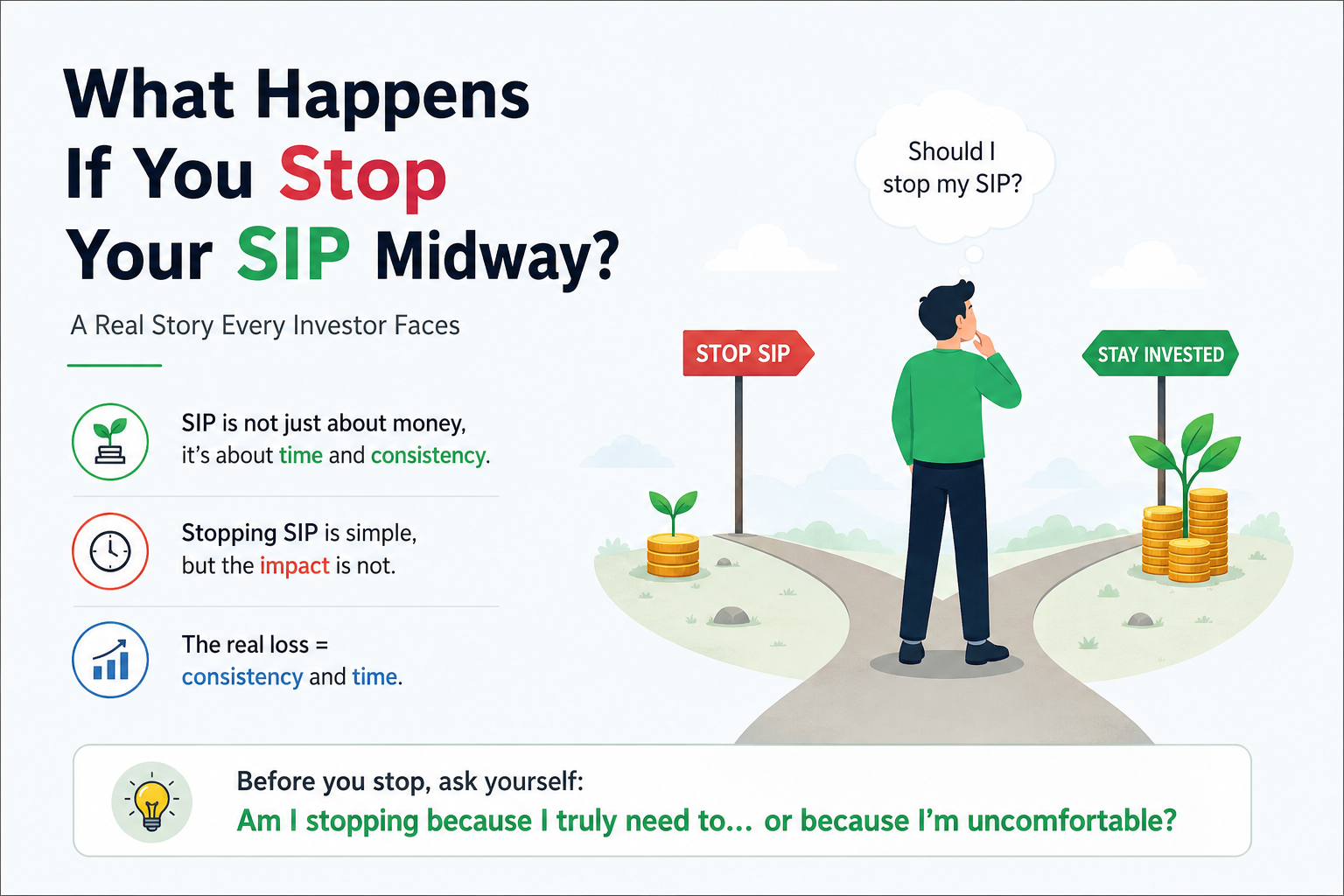
- Stopping SIP during market falls
These Small mistakes at the beginning of investing can have a big impact over time.
A Simple Strategy for Beginners
If you’re just starting, keep things easy.
- Begin with a SIP in an index or hybrid fund
- Increase your investment slowly over time
- Stay invested for the long term
You don’t need to be perfect. You just need to stay consistent.
Final Thoughts
A choice of Mutual fund is not deciding by the returns, It’s about finding what suits your situation.
Focus on your goals, understand your comfort level, and keep your approach simple.
You’ll learn more as you continue investing.
Start small, stay patient, and give your investment time to grow.
Disclaimer
This article is intended for educational purposes only and reflects personal experience. Kindly consider this as Financial advice.
About the Author
My self, Livin Rangasamy, NISM-certified professional and mutual fund distributor, focused on simplifying personal finance for beginners.
For Similar posts : –CLICK HERE