Direct vs Regular Mutual Funds — The Thing I Wish I Knew Earlier
I didn’t know this when I started investing. Honestly… not even a little. Like most people, I just trusted the person sitting across the table at the bank.
He suggested a mutual fund.
Explained SIP.
Told me “this is good for long term.”
Sounded reasonable. So, I started.
How to Build Wealth in Your 20s: Simple Plan to Save, Invest & Avoid Money Mistakes
The part I didn’t notice
Months went by. Then years. I kept investing. Didn’t question anything.
I thought — “Good, I’m doing something for my future.”
And to be fair, I was. But I didn’t realize I was also giving away a small part of my returns every year.
Not in a visible way. It was happening quietly.
The conversation that changed everything
One day, myself and my friend. We somehow ended up comparing investments.
- Same category of mutual fund.
- Similar time period.
- Almost same SIP.
But his returns were slightly better. Not crazy difference… but enough to notice.
So I asked him:
“Which fund are you using?”
He told me.
It was the same fund.
That confused me
Same fund. Same market. Same time.
So why different returns?
Then he said one line that I didn’t understand at that time:
“I invest in the direct plan.”
What I found later
That night I have deep dived in reading, watching, trying to understand and the answer was surprisingly simple.
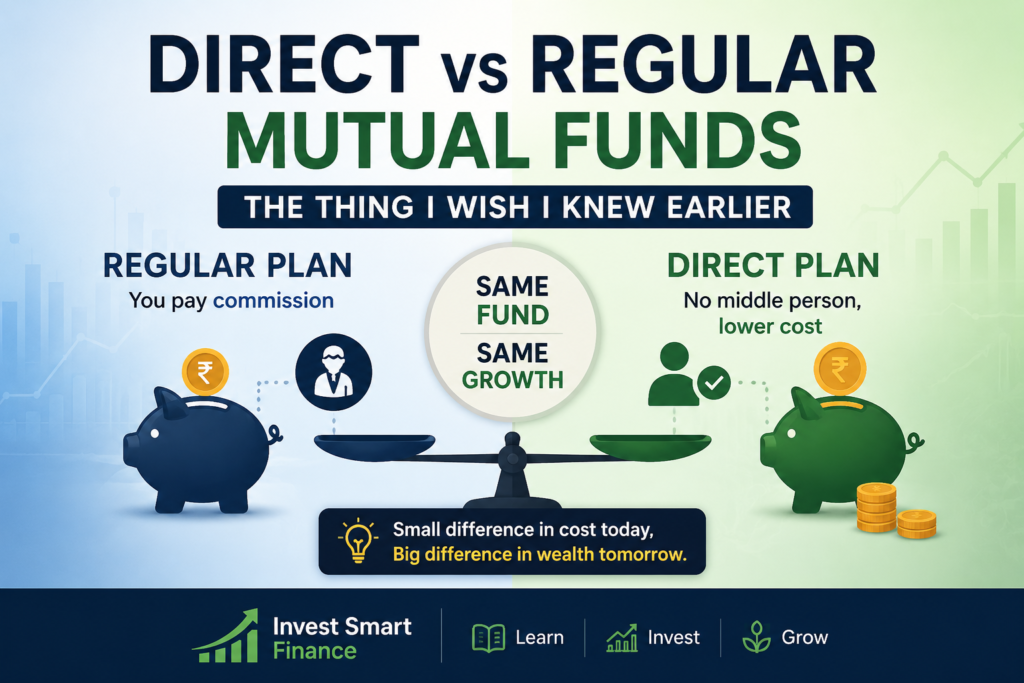
There are two ways to invest in the same mutual fund:
- One is through someone
- One is by yourself
That’s it.
Regular plan — what I was using
When you invest through a:
- bank
- agent
- or advisor
You are in the regular plan.
They help you:
- choose funds
- set up SIP
- explain things
But here’s the part I didn’t notice:
They get paid. Not by asking you directly… But from your investment itself. Every year.
Direct plan — what he was using
In a direct plan:
- no middle person
- no advisor in between
- you invest on your own
Which basically means:
👉 no extra cut taken out
So whatever the fund earns… more of it stays with you.
The funny part
Both are the same fund.
This is what shocked me the most.
- Same company
- Same manager
- Same stocks
Nothing changes.
Except one thing:
👉 cost
And cost… behaves differently than we think
At first I thought:
“Okay, maybe it’s a small difference. Doesn’t matter.”
But investing doesn’t work like that.
A small cost today doesn’t stay small. It keeps eating your returns quietly. Year after year.
Let me put it the way I understood it
Imagine two buckets. Both getting water at the same speed. But one bucket has a tiny hole at the bottom.The hole is small. You might ignore it.
But after years?
👉 One bucket ends up with less water.
That’s exactly what’s happening here.
So should everyone just switch to direct?
Not really. This is where things get more real, Investing is not also about numbers.
It’s also about behavior.
I’ve seen people do this
They switch to direct plan to “save cost”…
but then:
- get confused
- pick random funds
- panic when market falls
- stop SIP
And end up making bigger mistakes. In that case, the cost they saved didn’t matter.
So what actually matters?
Knowing yourself matters more.
Not choosing “what’s best.”
Choosing “what works for you.”
If you are just starting
It’s okay to take help. Really.
Sometimes guidance is worth paying for, because confidence matters in investing.
If you don’t understand what you’re doing, you probably won’t stay consistent.
If you’ve learned a bit already
Then things change.
Once you:
- understand basic concepts
- stop reacting emotionally to market swings
- become comfortable managing your investments
Then paying extra starts to feel unnecessary. That’s when direct makes more sense.
What I did
I didn’t make a sudden switch. I didn’t panic and change everything overnight.
I slowly learned first. Took my time. Understood what I was investing in.
And only then… I moved. Gradually.
Something most people don’t even check
Open your mutual fund details once. Just look at the name.
If it says “Direct Plan”, you’re in direct. If it doesn’t… you’re probably not.
Simple as that.
Don’t delay investing because of this. Seriously.
This is where most people go wrong. “Don’t try to learn and understand perfectly to start” …
and end up not starting at all.
That’s a bigger loss than any commission.
If I had to say it simply
- Start first
- Learn slowly
- Improve step by step
That’s enough.
Final thought
Looking back, I’m not upset that I started with a regular plan. At least I started.
That matters more.
But once I understood how things work, I made a better choice.
And that’s all investing really is:
👉 Not being perfect…
👉 but getting a little smarter over time
If you made it till here, you’re already doing better than most people who invest blindly.
Just keep going.
For More similar posts :- CLICK HERE