
Types of Mutual Funds in India, I prefer & Why
When I first started learning about mutual funds, the most confusing part wasn’t how to invest — it was understanding the different types.
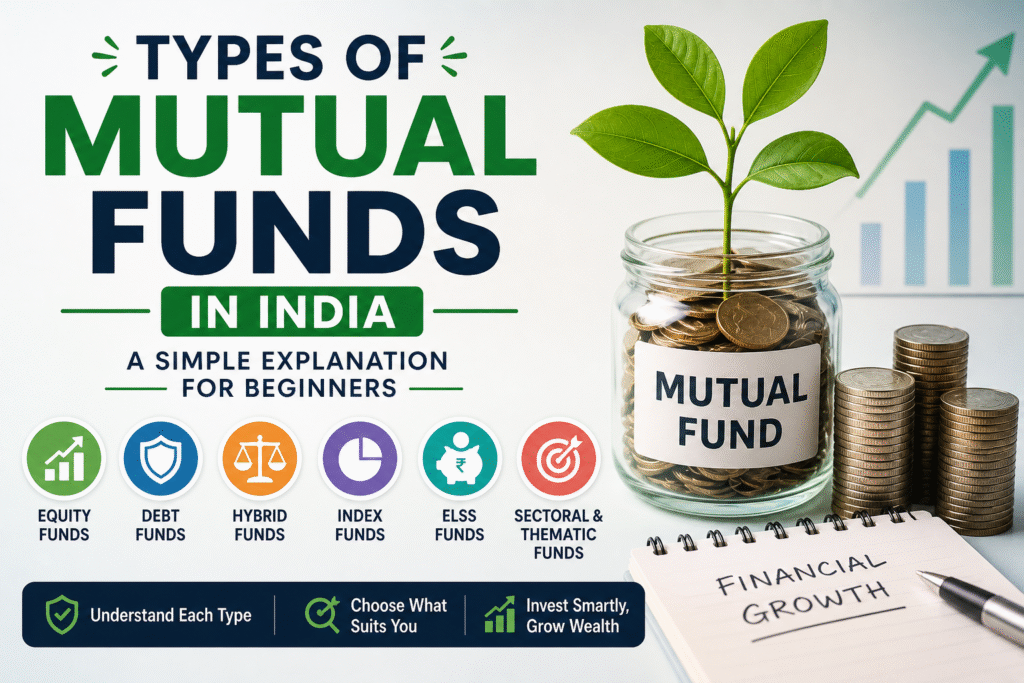
Everywhere I looked, there were terms like equity, debt, hybrid, and index funds. It felt like I needed to understand everything before even starting.
But that’s not really true.
You don’t need to know everything. You just need a clear idea of what each type is meant for. Once that clicks, things become much easier.
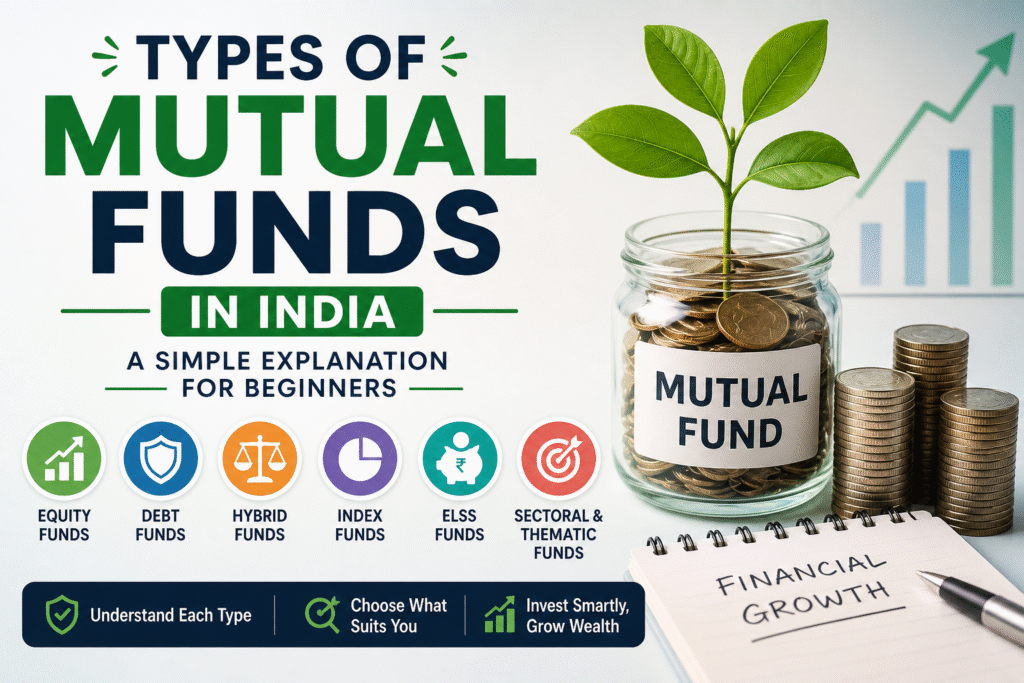
What are the types of mutual fund in India?
Mutual funds are divided into different types based on where the money is invested and what the goal is.
- Some are meant for growth.
- Some focus on safety.
- Some help with tax saving.
Understanding these types will help you choose the right mutual fund based on your needs.
Equity Mutual Funds – For Long-Term Growth
- Equity mutual funds invest mainly in stocks.
- This is where higher returns usually come from. But at the same time, these funds can go up and down in the short term.
- That’s why they are better suited for long-term investing.
- If you are investing for goals like wealth creation or future planning, equity mutual funds are often a good option.
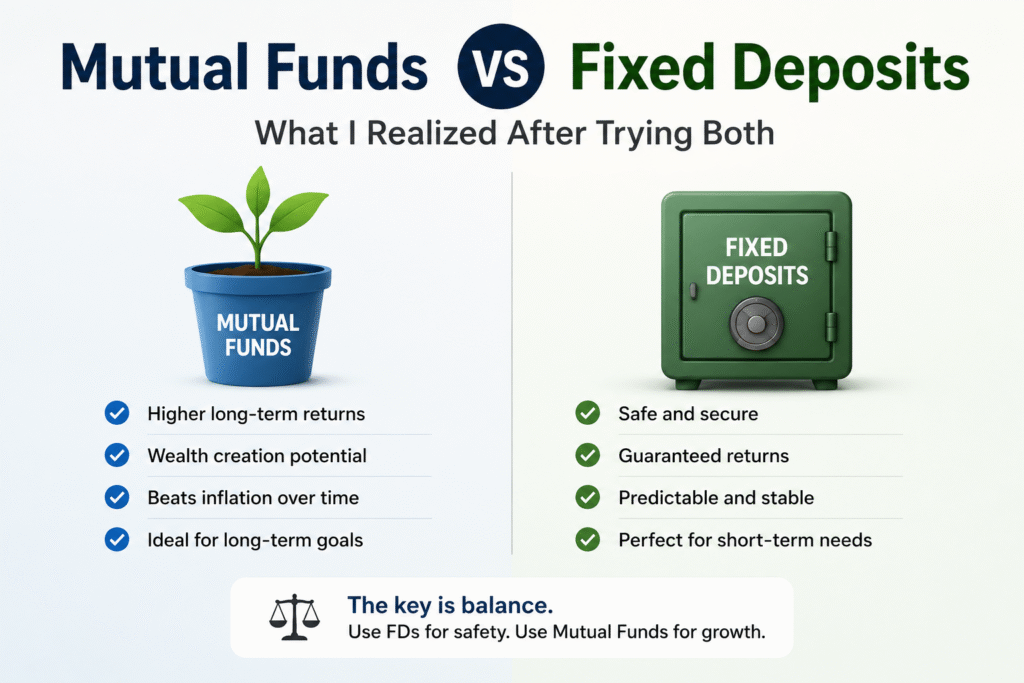
Debt Mutual Funds is always For Stability and Lower Risk
- Debt mutual funds invest in bonds and gilt funds.
- Debt Funds are more stable compared to equity funds and they have very less mirror to market volatility.
- Returns are usually lower, but the risk is also lower.
- These funds are commonly used for short-term goals or for keeping money relatively safe.
Hybrid Mutual Funds – A Balanced Approach
- Hybrid mutual fund invests in both equity shares and debt.
- This mix helps balance risk and return. They don’t grow as fast as pure equity funds, but they are also less volatile.
- For beginners, hybrid funds can be a comfortable starting point.
Index Funds – Simple and Low-Cost Investing
- Index funds follow a market index like Nifty 50 or Sensex.
Hybrid funds do not beat and returns of market. Instead, hybrid funds aim to match its performance. - Because they are not actively managed, they usually have lower costs.
- Index funds are a simple and effective option for long-term investors.
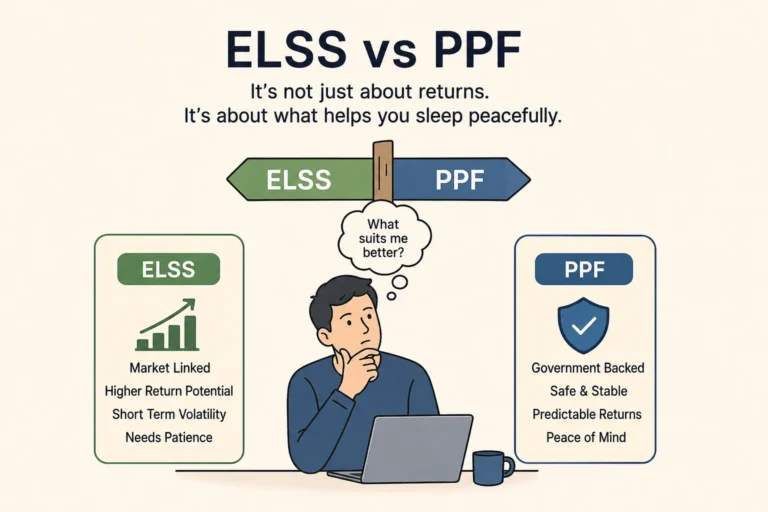
ELSS Funds – Tax Saving Mutual Funds
- ELSS (Equity Linked Savings Scheme) funds are mutual funds that invest for tax benefits in equity-oriented funds.
- ELSS funds is qualify for section 80 C for deduction for tax.
- They come with a lock-in period of 3 years, which means you cannot withdraw your money during that time.
- These funds are useful if you want both tax saving and long-term growth.
Sectoral and Thematic Funds – High Risk, High Focus
- Sectoral funds invest in specific industries like banking, IT, or healthcare.
- They can perform very well when that sector grows, but they also carry higher risk.
- These funds are usually better suited for experienced investors.
How to Choose the best and right Type of Mutual Fund for you :-
Choosing the right mutual fund type depends on your goal and risk level.
Ask yourself:
Whether you are investing for your short-term goals or long-term goals, can you handle Market ups and downs?
What is your main goal?
Simple guideline:
- Long-term goals → Equity or index funds
- Short-term needs → Debt funds
- Balanced approach → Hybrid funds
Common Mistakes to Avoid:-
Many beginners make avoidable mistakes when choosing mutual funds:
- Selecting funds based only on recent returns
- Ignoring risk level
- Investing without a clear goal
- Switching funds too frequently
Understanding the type of fund is more important than chasing high returns.
Final Thoughts :-
Mutual funds may seem confusing at first, but once you understand the different types, things become clearer.
Begin with a simple approach and improve your understanding over time.
If you are just starting, focus on choosing the right type based on your goal and stay consistent.