Complete Guide to Mutual Funds in India (2026): A Simple Guide for Beginners
If you are planning to start investing but don’t know where to begin, mutual funds are one of the easiest options to consider.
Mutual Funds in India (2026): A Beginner’s Guide Explained Simply
If I look back, the biggest reason I didn’t start investing early was simple — I thought I didn’t understand it well enough and honestly, that’s how most people feel.
There’s so much information online that it starts to feel confusing.
But in reality, you don’t.
Once you get the basic idea, things become much easier. That’s where mutual funds come into the picture — they simplify investing for people like us.
What does a mutual fund mean?
Instead of going by technical definitions, let’s keep it real. Imagine a bunch of people putting their money into one common pool. Now that pool is managed by someone whose job is to invest it wisely.
This person is called as the fund manager who decides where the money should go. It could be stocks, bonds, or other options. So instead of you making all the decisions alone, someone experienced takes care of that part.
Another thing that helps is diversification. Your money isn’t stuck in one place, it’s spread across different investments. That reduces the impact if one of them doesn’t perform well.
Why do beginners usually prefer mutual funds?
To put it simply, it makes things manageable. You don’t have to track the stock market every day or spend hours researching companies. Here’s why many people feel comfortable starting here. You don’t need a large amount to begin, Your investment is spread across multiple assets, You’re not handling everything on your own and especially, It works well if you’re thinking long term.
But it’s important to stay grounded. There will be days when your investment value drops. That’s normal. If you’re expecting fast returns all the time, you’ll probably get frustrated.
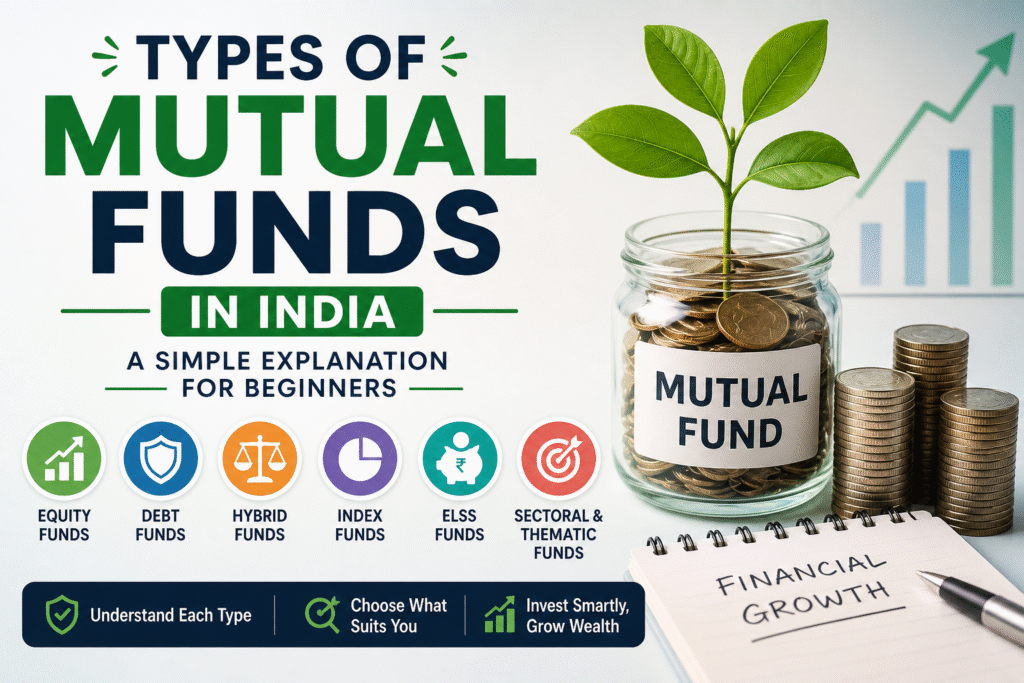
Types of mutual funds?
You don’t need to dive deep into categories when you’re starting. A basic understanding is enough.
Equity funds :-
These invest in company shares. They may fluctuate more, but over a longer period, they have potential to grow better.
Debt funds
These are relatively stable since they invest in safer instruments like bonds.
Hybrid funds
These combine both equity and debt, trying to balance risk and return.
Index funds
These follow a market index instead of trying to beat it. Simple and low-cost.
ELSS funds
Useful if you’re looking to save tax, but they do come with a lock-in period.
That’s honestly enough to get started.
How does the money grow in mutual funds?
There’s nothing complicated here. When the investments perform well, your fund value increases Over time, the returns you earn also start earning returns
This second part is what people call compounding. It doesn’t look impressive in the beginning, but over time it builds momentum, only if you stay invested.
Are mutual funds risky?
Yes, they are risky sometimes, but not in the way many people assume. The market keeps moving up and down. That’s part of how it works. A typical pattern you’ll notice, If Market falls people get nervous, they stop investing or withdraw money later when Market later recovers, they miss out. So the bigger issue isn’t always the market — it’s how we respond to it.
SIP or lump sum, how should you invest?
If you’re new, SIP is usually the easier path.You invest a fixed amount regularly, and you don’t have to worry about finding the “perfect time”. It also builds consistency.
Lump sum investing is different. You put in a large amount at once. It can work well, but it comes with more uncertainty, especially if timing is off.
How do you decide which fund to choose?
You don’t need complicated analysis in the beginning. Start with a few basic questions:
- What am I investing for?
- How long can I keep this money invested?
- Can I handle short-term ups and downs?
Once you’re clear on that, choosing becomes easier. Looking at past performance helps, but don’t just go for whatever gave the highest return recently. Stability matters too.
What about taxes?
You don’t need to go deep into this right away. Just keep a simple idea:
Staying invested longer usually has better tax treatment, ELSS funds help reduce taxable income. That’s enough for someone starting out.
How do you begin?
The process today is quite simple. Pick any trusted app or platform. Complete your basic verification (KYC) then Choose a fund and Hooray now you can Start investing
You don’t need to wait until you have a big amount. Starting small is completely fine. Common mistakes people make, There are a few patterns you’ll notice. Waiting endlessly instead of starting, Stopping investments during downturns, Acting on random tips, Tracking investment value too often and also Looking for quick outcomes. Over time, these habits matter more than the investment itself.
Final thoughts
You don’t need to know everything before you begin. What matters is starting early, staying consistent, and not going to short-term changes. Mutual funds are just a tool. If you use them patiently, they can work in your Favor.
Author
I am Livin Rangasamy, an Author, Engineer, AMFI ( Association of mutual funds in India) registered Mutual fund distributor and a guy who is more interested to teach finance to people who are interested.
Disclaimer
This content is meant for general understanding only and should not be taken as financial advice. It’s always better to do your own research or consult a professional before investing
Also check out :- Investment in Mutual Funds | Mutual Funds Sahi Hai